


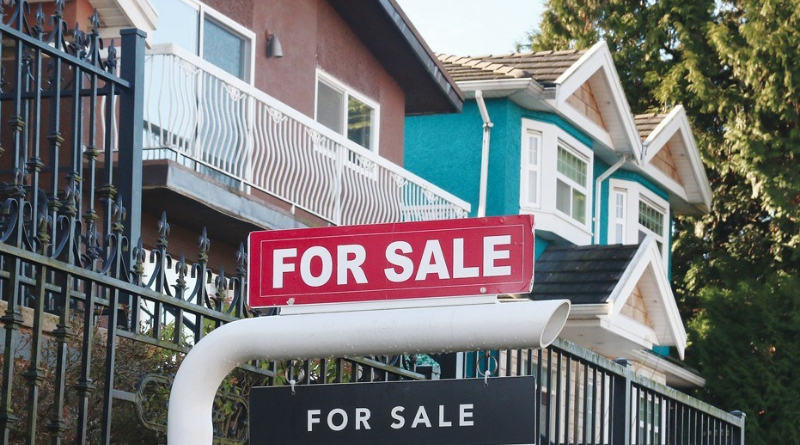
The Canadian housing market “will be reduced from 2021 historical levels” in terms of price, sale, start-up and rental next year – but not where owning a home or rent will be more affordable than it currently is.
That was the forecast published by the Canadian Mortgage and Housing Corporation, or CMHC, this morning in its latest Housing Market Outlook. The report notes that, despite the expected price and price ratios across Canada, growth costs will continue to outpace income growth in several major cities – placing “significant pressure on homeowners.”
“Improvements in employment and migration rates are expected to be significant, as the impact of the epidemic continues to decline,” CMHC chief economist Bob Dugan said in a statement on sales, prices and housing begin to remain high in 2022. “By 2023 and by 2024, inflation will tend to move closer to long-term rates, where sales and start-ups are expected to last more than 5 and 10 years.”
The report paints a similar picture of Metro Vancouver, Canada’s most expensive housing market. According to the CMHC, real estate prices should fall this year from the momentum of 2020 and 2021 – but the demand for immigrants and the rising cost of debt will lead to a decline in affordability.
The CMHC project for the housing growth rate in the Greater Vancouver region will not continue with its two-digit rate beyond Q1 2022, and the inflation rate will actually fall below 5% year-on-year by 2023.
When asked during a media briefing about the release of the forecast, Dugan – despite commenting on a number of issues – blamed the majority for the same reason.
“Despite a strong foundation for start-up housing, housing stock in Canada is very low, and the forecast pace of new housing construction over the next few years will not be enough to address the shortfall,” he said. “More housing is needed.”
Dugan added that the overcrowding of the real estate market would have a negative impact on rent, as people who could not afford affordable housing would now be forced to stay rented – underscoring the current shortage of property. keeping the rental requirement high.
“[Housing] supply has been very low compared to the need that even if you have to postpone it a bit, I think you can still have a situation that continues to increase prices,” he said.
“We are definitely looking forward to inflation next year as housing prices rise,” Dugan continued. “… But the main idea is that supply constraints continue to bind in this area and it continues to put increasing pressure on prices … We need to do a lot of work on supply to get to where we can be stable. prices and let revenue go up. ”
Braden Batch, CMHC’s senior analyst for market data (and the author of the Outlook on Vancouver chapter), noted that there was a shift in predicting the continued growth of the Lower Mainland real estate market. Batch noted that “problems in the national and international markets” – from interest rates to other economic pressures in B.C. real estate buyers – could reduce market activity to a greater extent than expected if Metro Vancouver could not stay closed.
Similarly, housing construction will decline this year in Metro Vancouver and switch to separate units, but the shortage of skilled tradesmen and supply chain issues will continue to increase construction costs.
“Vancouver will emerge from this epidemic with a strong economy,” Batch said in a statement. “Moving abroad will be a major need in the next few years, but shortages at all levels and tightening debt have led to worse access.”
The theme of ongoing inflation is reaching out to the rental market. The CMHC predicts that Vancouver’s vacancy rate will remain close to 1%, all of which while the economic downturn and migration will put new pressures on demand, leading to higher rents.
“Long development periods and the current level of construction will not provide enough new units over the next three years to increase space prices or provide adequate competition among property owners to reduce rent,” Batch said. “High rental pressure is unavoidable in a large market, especially when rent-controlled units turn around and cost prices in the current market.”
Overall, the forecast predicts the VLL Vancouver CMA MLS price to be between the high of $ 1,459,000 and the low of $ 1,064,000 – not showing significant deviations from the 2021 target of $ 1,150,357 and clearly higher than the recorded level of COV3-1923 . in 2019.
Home sales this year will be between 44,000 to 60,000, and not far from the 2021 and 2020 figures (61,829 and 44,468, respectively). Also, that estimate is much higher than the pre-epidemic levels in 2019 (35,715 sales).
